Chapter 1: Foundation - Mindful Breathing & Awareness
Today's Focus
Welcome to Day 5! You've built a solid foundation in breath awareness and learned to use breathing as your anchor. Today, you'll discover one of mindfulness's most powerful applications - how conscious breathing can help you navigate emotions with greater ease and self-compassion.
What You'll Learn
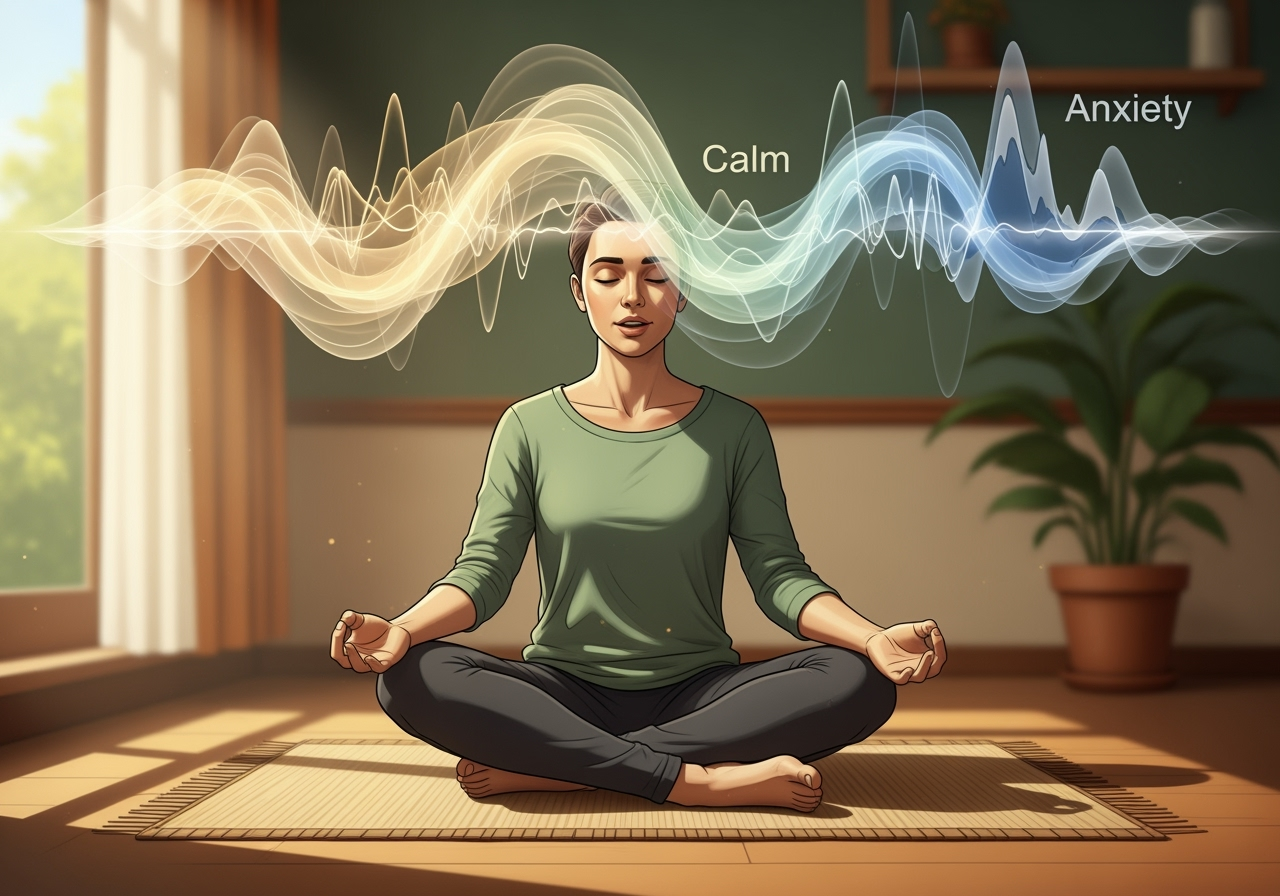
How emotions naturally affect your breathing patterns
Using breath to create space around difficult feelings rather than suppressing them
The practice of self-compassion through nurturing breaths
Why breathing with emotions is more helpful than breathing away emotions
What to Expect
Normal Experiences:
Emotions arising that weren't there when you started
Your breathing pattern changes when emotions shift
Feeling resistant to difficult emotions at first
Some emotions feel easier to breathe with than others
Moments of unexpected tenderness toward yourself
Positive Signs:
Any sense of softening around difficult emotions
Noticing the connection between breath and feelings
Moments of self-compassion, however brief
Feeling less overwhelmed by emotions, even if they're still present
Completing the practice despite emotional discomfort
Step-by-Step Instructions
-
As you settle into your familiar position today, take a moment to gently scan your emotional landscape. Without trying to change anything, simply notice:
What emotions are present right now?
Are you feeling calm, anxious, excited, tired, frustrated, content?
Where do you feel these emotions in your body?
What's the overall emotional "weather" inside you today?
There are no good or bad emotions to have. You're simply becoming curious about your inner experience.
-
Take three conscious breaths, breathing in acceptance of whatever emotions are present and breathing out any need to fix or change your feelings. You're creating a safe space to be with whatever is here.
These breaths signal to your nervous system that all feelings are welcome in this practice space.
-
Begin with simple breath observation, like you've practised all week. As you do this, notice if your current emotions are affecting your breathing in any way:
Is your breathing faster or slower than usual?
Deeper or more shallow?
Are you holding your breath anywhere?
Does your breathing feel tight or relaxed?
Emotions and breathing are intimately connected. You're simply observing this natural relationship.
-
Minutes 1-2: Noticing Without Changing
Continue breath awareness while staying open to any emotions that arise
If difficult emotions come up, resist the urge to breathe them away
Instead, breathe with them, let your breath be a gentle companion to your feelings
Notice how emotions might change your breathing, and how breathing might affect emotions
Minutes 3-4: Creating Space Around Emotions
If you notice any challenging emotions (anxiety, sadness, frustration, restlessness), try this:
Breathe in, acknowledging the emotion: "I notice anxiety is here"
Breathe out, creating space: "I can breathe with this feeling"
You're not trying to eliminate emotions, but creating room to coexist peacefully with them
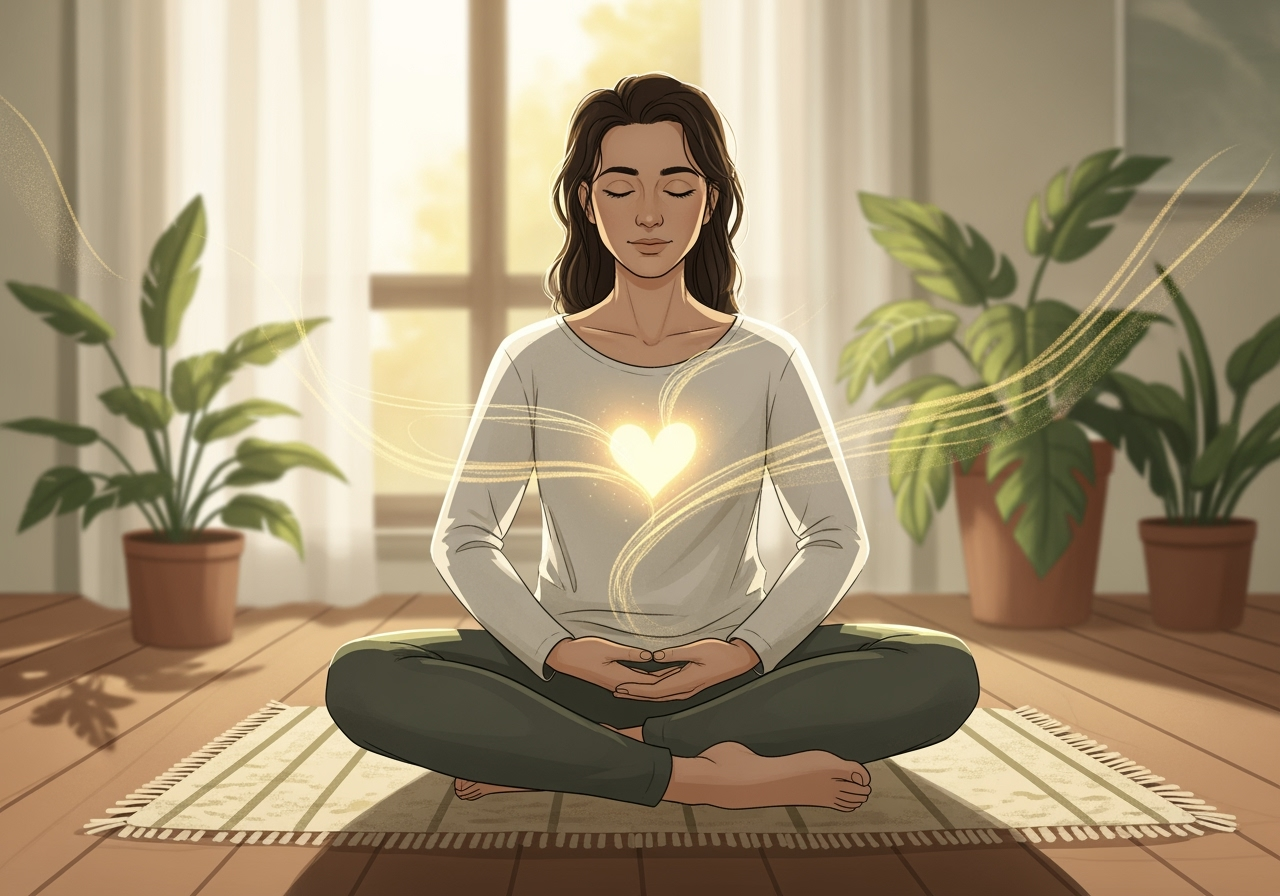
Minute 5: Self-Compassion Breathing
Place one hand on your heart if that feels comfortable
Breathe as if you're sending kindness to yourself
With each inhale, imagine breathing in patience and understanding
With each exhale, send yourself the same compassion you'd offer a good friend
You're practicing being a loving friend to yourself, especially when emotions feel difficult.
-
For the final minute and a half, continue breathing with self-compassion. Silently offer yourself phrases like:
"May I be kind to myself"
"May I accept my feelings with patience"
"May I find peace in this moment"
End by appreciating yourself for showing up to practice, especially if today felt emotionally challenging.
Today's Reflection Questions
After completing your practice, take a moment to consider:
What emotions did you notice during today's practice, and how did they affect your breathing?
Was there a difference between trying to breathe away emotions versus breathing with them?
How did it feel to offer yourself compassion through your breathing?
Did you notice any emotions shifting or changing during the practice?
What was it like to create space around difficult feelings rather than trying to fix them?
Remember that all emotional experiences during practice are valid and valuable learning opportunities.
Today's Win
Today, you practised one of the most courageous acts possible, being present with your emotions without trying to fix or change them. This is advanced emotional intelligence in action. Every moment you spent breathing with difficult feelings was a moment of building resilience and self-compassion.
You're learning that you don't have to be afraid of your emotions, you can be curious about them, breathe with them, and offer yourself kindness while experiencing them. This is a life-changing skill that will serve you in countless situations.
Next Lesson’s Preview
Tomorrow you'll learn how to integrate mindful breathing into your daily life through micro-practices. You'll discover how to use brief moments throughout your day to maintain the calm and awareness you're building in these longer sessions.
For tonight: As you prepare for sleep, if any worries or emotions arise, practice breathing with them rather than trying to push them away. Let your breath be a gentle companion to whatever you're feeling.
Duration: 9 Minutes
Difficulty: Easy